

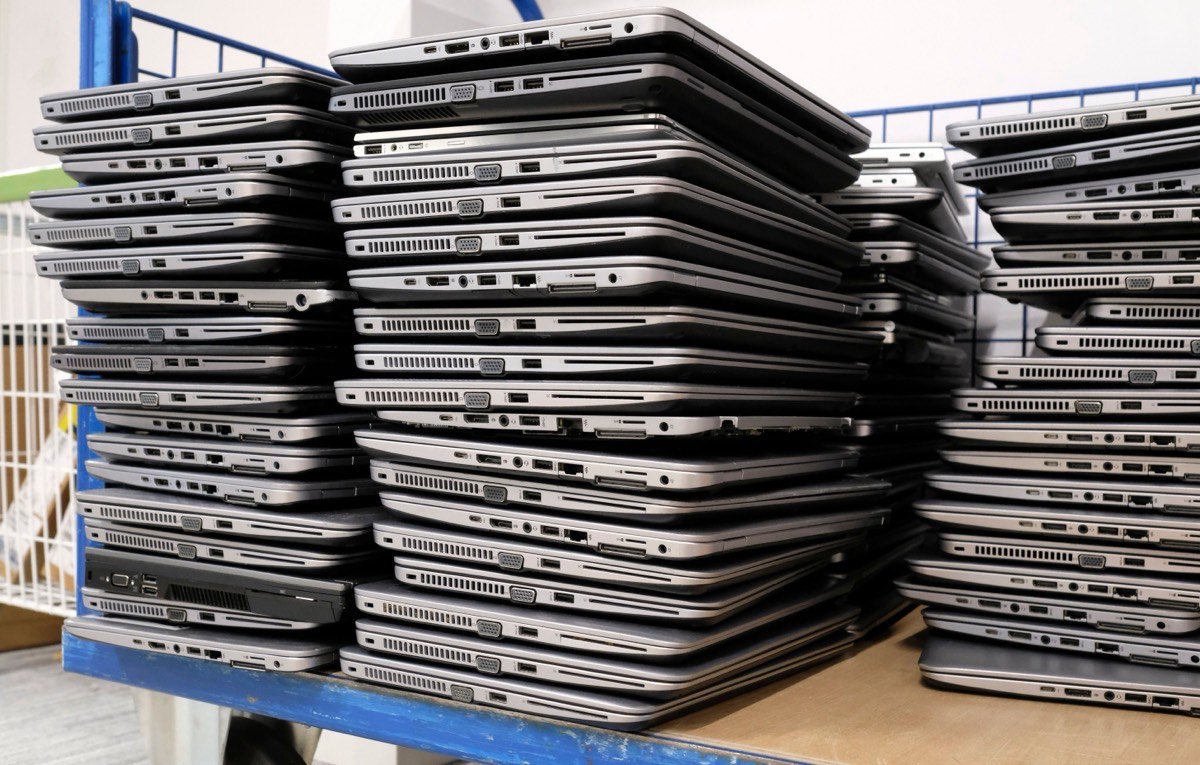
The Hidden Cost of Manual IT Asset Disposition
Most enterprises have a process for retiring IT devices. Spreadsheets, a shared inbox, email threads with the ITAD vendor. Devices get collected. Most get erased. Certificates arrive weeks later. It works, until an audit reveals that a quarter of your fleet has no erasure documentation. Not because the devices weren't erased, but because nobody filed the certificates. That gap is the hidden cost of manual ITAD.
What manual ITAD actually looks like
A device reaches end-of-life. Someone updates a spreadsheet. An email goes to procurement. The ITAD vendor gets a pickup request. The device ships. Weeks pass. A certificate PDF arrives in someone's inbox. Maybe they file it. Often they don't.
Each step works in isolation. The problem is the space between them. Every handoff is a gap where data gets lost, delayed, or duplicated. At 50 devices a quarter, it's manageable. At 500 across multiple countries, it isn't.
Where the time goes
ITAD coordination is expensive because nobody owns it full-time. It's bolted onto someone else's job. A bit of IT ops, a bit of procurement, a bit of compliance. The work happens in small, interruptive bursts that never show up in resource planning.
IT operations handles inventory updates and tracking, a few hours per office per quarter. Procurement manages vendor communication and scheduling for each pickup batch. Compliance collects and files certificates, often weeks after erasure. And when an audit comes, legal and compliance spend days or weeks reconstructing the trail from email attachments and spreadsheet tabs.
Almost nobody tracks vendor performance either. Pickup-to-erasure times, certificate turnaround, grading accuracy. There's no practical way to do it without correlating timestamps across email threads, so underperforming vendors stay in the rotation by default.
The audit gap
The GDPR storage limitation principle requires that personal data is not kept in identifiable form longer than necessary. Once a device reaches end-of-life, the data on it must be erased and verified as irrecoverable. ISO 27001 mandates documented media sanitisation. NIS2 extends these obligations to the supply chain. The common thread: you need device-level proof that data was destroyed, with timestamps, methods, and verification.
The gap between "device erased" and "certificate accessible to the compliance team" is typically 30 to 90 days. During that window, the erasure record exists but isn't discoverable. Auditors flag it. Regulators may not accept it.
This compounds with multiple vendors. A company using three ITAD partners receives certificates in different formats, with different data fields, at different speeds. The compliance team becomes the integration layer, manually normalising vendor outputs into something auditable.
Value left on the table
Every retired device has residual market value. A three-year-old business laptop in good condition trades at €150 to €200 through ITAD resale channels. Across a 2,000-device fleet refresh, that's potential recovery of €300,000 to €400,000. Most enterprises recover a fraction of that.
Timing is the first problem. Devices sit in storage for months waiting for someone to schedule a pickup. Market value drops 1 to 3% per month as newer models enter the refurbishment channel.
Grading visibility is the second. Vendors grade devices after collection, but the enterprise rarely sees the data. You accept the vendor's assessment of what your fleet is worth with no way to verify or compare.
And without a mechanism to benchmark pricing across vendors, most enterprises reuse whoever they used last time. No competitive pressure means the vendor sets the terms.
The vendor fragmentation problem
Enterprise ITAD is multi-vendor by necessity. You need local partners for logistics and regulatory compliance in each jurisdiction. But you also need centralised visibility for reporting and audit. Manual processes force you to choose one or the other.
An enterprise with offices across multiple regions typically works with at least three ITAD partners, each with a different scheduling method, certificate format, pricing model, and SLA expectations. The IT team stitches vendor outputs into a single view, translates between formats, and chases missing records. It's necessary work, but it doesn't scale.
What an orchestration layer changes
The alternative isn't replacing your vendors. It's adding infrastructure between your organisation and your ITAD partners that handles coordination, documentation, and reporting.
In practice: devices enter disposition through a single interface regardless of location. Every handoff is tracked from the moment a device is flagged to its final outcome. Erasure certificates are generated per device the moment erasure completes. Grading and market value assessments are visible to the enterprise, not just the vendor. And compliance reporting is available on demand, covering every device, every vendor, every jurisdiction.
Building the internal case
If you recognise your organisation in this article, the barrier is usually internal buy-in rather than awareness. ITAD is nobody's top priority.
Track how many hours your team spends on ITAD coordination over one quarter. Include everyone who touches it. The total is always higher than anyone estimates. Then take your most recent fleet refresh and compare what you recovered per device against current secondary market pricing. Present the gap as an annual number, not a percentage.
For regulated industries, the compliance angle tends to be stronger than the cost angle. A documentation gap in your erasure audit trail gets more executive attention than a time-saving estimate.
Manual ITAD doesn't fail visibly. Devices get collected. Data gets erased. Reports get filed, eventually. The cost accumulates in things you don't see: coordination overhead, documentation gaps, and value that depreciates while devices wait for someone to schedule a pickup.